Investing in Our Team
At the heart of great customer service is knowledge.
The better we understand the products and brands we offer, the better equipped we are to help our customers find the right solutions for their needs.
That’s why we recently brought our team together for a dedicated training and development day: an opportunity to share knowledge, learn from one another, and invest in our team so we can deliver even greater value to our customers.
Putting Knowledge into Practice
The training day was about much more than sitting in a room listening to presentations. While product knowledge is an essential part of what we do, we wanted this session to be practical, collaborative, and focused on reaching a bit deeper to understand how the products we offer can solve everyday challenges.
A key objective was to ensure our team can confidently present the best-value tools and products to customers. By best-value, we mean using our knowledge to identify the options that will best support a customer’s needs and become valuable pieces of kit.
That means understanding what a product does, where it fits, who it can benefit, what problem it can solve, and where it fits within the bigger picture.
Learning From One Another
One of the most valuable aspects of the day was the emphasis on peer learning.
Rather than having one person instruct everyone else, we took a collaborative approach that encouraged everyone to share their knowledge, experience and ideas, and it’s safe to say we have a wealth of experience here at Rapid.
Everyone brings something different to the table. That might come from working with a particular product, solving a challenging customer application, understanding a specific area of welding, or having experience in a different part of the business.
Bringing those perspectives together strengthens the team’s overall knowledge.
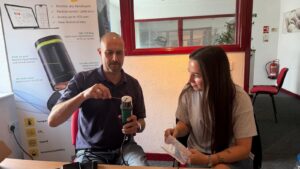
Putting Learning into Practice
A key part of the training was applying this approach to individual products. Rather than focusing on features and specifications, we selected some products and looked at where they could be useful.
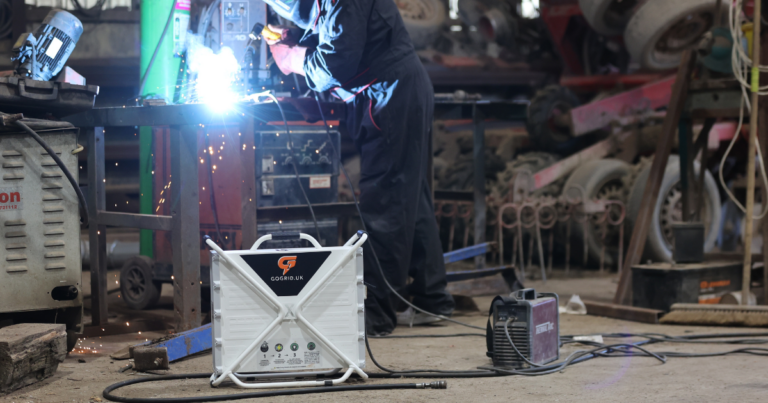
The GoGrid portable power pack was one of them.
With its high-capacity mobile power capabilities, the GoGrid creates opportunities where mains power isn’t available.
The traditional engine-driven generator has long been a go-to option for providing power in remote locations. However, generators can be heavy and cumbersome, and because they produce exhaust gases and vapours, they need to be operated in well-ventilated areas.
This led to discussion around the types of customers and working environments where a portable power solution such as the GoGrid could offer a practical alternative. For example, a welder working on-site at a remote location, a maintenance team carrying out repairs away from the workshop, or a contractor working in an area with limited access to mains power.
Matching Products to Applications
We then looked at several PATON machines and considered the different applications and customers they could support.
The ProTIG 200 AC/DC led to discussions around customers who need TIG capability away from the workshop, such as those carrying out repairs, maintenance or fabrication work on-site.
This also brought the Portable Tungsten Grinder into the mix. Its consistent, longitudinal grind helps maximise arc stability and, while it may be one of the smaller tools in the workshop, it highlighted how the right supporting equipment can improve the quality and consistency of the welding process.
The ProMIG 250 15-4 provided another perspective, particularly for customers who need flexibility across different types of welding work. We considered where its range of capabilities could benefit mobile welders or maintenance teams working across different jobs.
The StandardCUT 45 MAXflow highlighted a different customer need. For those carrying out cutting work on-site, its integrated compressor removes the need to transport a separate air compressor, making setup more practical where portability matters.
Each product prompted a different discussion, but the principle was the same: understand the product, understand the customer, and understand where the two meet.
It was also useful to see where different products can overlap, complement one another, or support different parts of a customer’s requirements.
Understanding those connections gave the team a broader view of the options available.
Looking at the Bigger Picture
That is ultimately what the training day was designed to achieve.
Our customers don’t always come to us knowing exactly which machine they need.
They may simply have a problem to solve: a job that needs to be completed away from the workshop, a difficult application, limited access to power, a requirement for greater portability, or a need to improve consistency or efficiency.
Our role is to understand that requirement and use our knowledge and experience to help identify the right options.
There isn’t always one right answer. But by combining product knowledge with practical experience and peer learning, we’re strengthening our ability to have more useful conversations with customers.
Instead of asking, “Which machine do you need?”, we can ask, “What are you trying to achieve, where are you working?”
The world of welding continues to evolve, and so will Rapid. By learning together, we’re making sure our team is ready to support our customers in the best way possible.