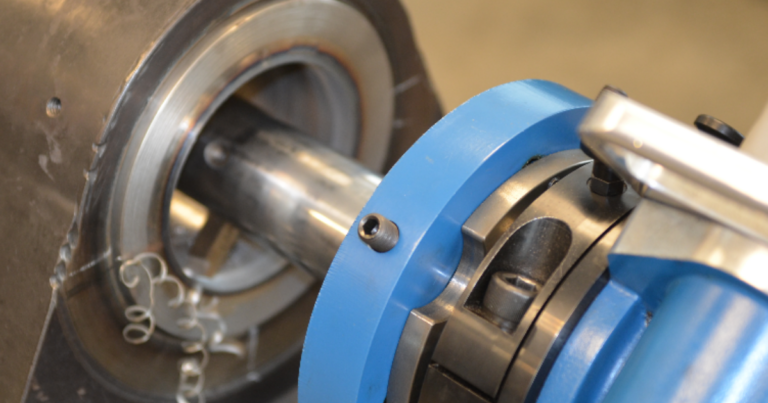
Laser cleaning? What’s wrong with my grinder?
If you’ve spent years welding and fabricating, you’ve probably got a perfectly good system for cleaning metal already.
Rust? Grinder.
Paint? Wire brush.
Heavy coatings and contamination? Chemical stripper.
Really stubborn stuff? Blast cabinet.
So why would you add a laser into the mix?
We’ve seen laser cleaning first-hand on industrial jobs, removing rust and corrosion from port bollards without chemicals or damage. Once you see what it can do on that scale, it starts to make more sense.
Let’s answer some of the questions you’re probably asking – and if there’s anything we’ve missed, feel free to get in touch.
“What can I use laser cleaning for?”
Laser cleaning can be used for a surprisingly wide range of jobs.
Removal of contaminants, coatings, rust, oxides, oil, and residues from metal. Surface preparation before welding or coating, and cleaning tooling, moulds and components.
The big difference is how it does the job.
Rather than abrasive blasting, chemical stripping, or mechanical grinding, laser cleaning uses highly controlled laser energy to selectively vaporise or dislodge unwanted material.
That makes it particularly interesting for jobs where you need to clean a surface without physically damaging the underlying material.
“Is it actually quicker than what I’m doing now?”
The honest answer is it depends on the job.
Laser cleaning can be significantly faster than traditional methods for suitable applications, but don’t just compare the laser’s time to how long cleaning usually takes you.
Look at the whole job.
- Changing discs.
- Setting up blasting equipment.
- Handling abrasives.
- Using chemical products.
- Cleaning up afterwards.
If laser cleaning can reduce some of those steps, the time saving can quickly add up – particularly if you’re cleaning the same type of components again and again.
“But will it damage the metal underneath?”
This is probably one of the biggest concerns, particularly when you’re working on expensive or precision components.
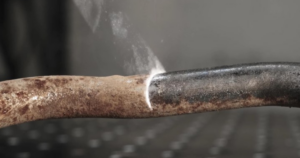
The good news is that laser cleaning is a non-contact process.
You can control how the laser operates based on what you’re cleaning and the material. Power, speed and the way the laser moves across the surface can all be adjusted.
Get those settings right, and the laser can remove the contaminant while leaving the good metal underneath largely untouched.
Get them wrong, and you can damage the surface – a bit like using the wrong settings when you’re welding.
“Is it actually going to save me money?”
A laser cleaning machine is an investment, so it’s important to weigh that cost against what your current cleaning process costs you.
- How many grinding discs and wire wheels are you getting through?
- How much are you spending on chemical products?
- How many hours is someone taking to clean components?
- How much time is taken preparing surfaces before welding or coating?
If laser cleaning reduces some of that time, labour and consumable use, it could make a significant difference to the cost of getting a component ready for the next stage.
“What’s the catch?”
There is one.
It’s a serious piece of industrial equipment.
Many industrial laser cleaning systems use Class 4 lasers, so proper safety measures are essential.
Controlled areas, appropriate laser eyewear, barriers, signage, operator training and risk assessments all need to be considered.
And what you’re removing matters too.
Paint, coatings, and other contaminants can produce fumes and particulates during processing, so suitable extraction is an important part of the setup.
Final Thoughts
Overall, we think one of the most important questions to ask if you’re considering laser cleaning is:
“Could it be a better way of doing what we’re already doing?”
It’s about looking at the jobs that take time, use a lot of consumables, create mess, or simply aren’t as straightforward as you’d like – and asking yourself, is there another way we can do this?
Having seen laser cleaning in action, we know where it can make a genuine difference – but we don’t expect you to take our word for it.
Come and see for yourself.
At Rapid, we offer laser cleaning demonstrations, so bring us a component, a coating, some rust – whatever it is you’re currently struggling with.
We’ll put the laser to work on it so you can see the results for yourself, ask questions, and compare it with how you’re currently doing the job.
Because when you’re considering investing in new equipment, seeing it work on your material, your contamination and your application tells you far more than a brochure ever could.
Then you can make up your own mind.
Could laser cleaning save you time? Could it reduce your consumables? Could it make some of those awkward cleaning jobs easier?
And ultimately:
Could it be time to give your grinder a little less work to do?